School day success
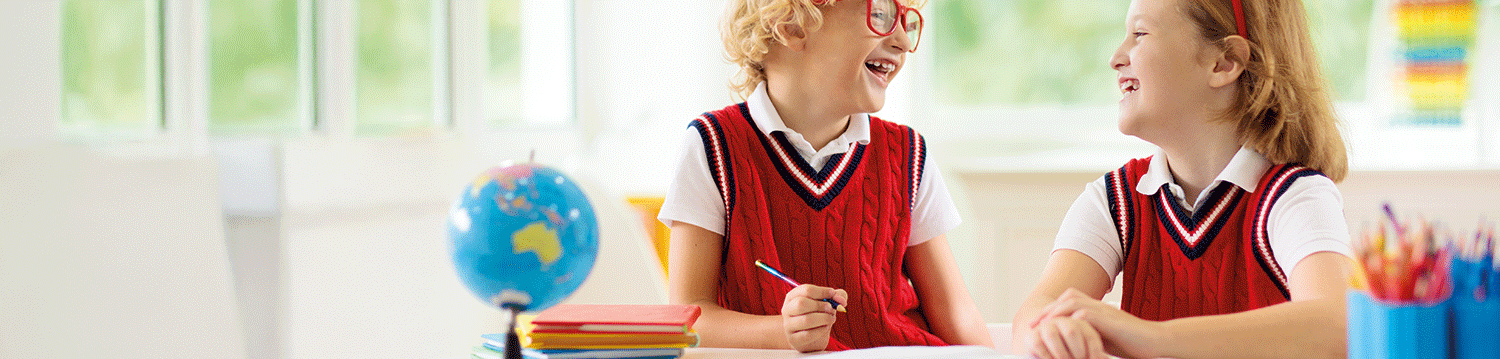
Expert tips to help children return to the classroom feeling healthy, happy and ready to learn
As the summer holidays draw to a close, it’s time to start thinking about the return to school. From rebuilding healthy routines to supporting immunity and sleep, a little preparation can help children settle back into the classroom with confidence. Here are some expert tips for making the transition as smooth and healthy as possible.
Fuel for learning
“It’s so important to fuel children with the right nutrition to power them through busy days of learning,” says bestselling baby and children’s cookery author Annabel Karmel. “Food plays such an important role in feeding concentration levels and giving your child the energy boost they need to step into the classroom.”
When it comes to breakfast, eggs are one of Annabel’s top recommendations. She says: “They’re packed with protein, iron, vitamin D and essential omega-3 fatty acids. Think egg muffins, frittata slices or eggs on toast. They will help to kick-start their day and keep them feeling fuller for longer – meaning they’ll reach less for sugary snacks. However, time isn’t always on our side when it comes to preparing breakfast so it can be as simple as wholegrain toast with peanut butter and a side of fruit, porridge or overnight oats with yoghurt and banana for example. Where you can, add in nut butter, flaxseeds or chia seeds to these too for an extra boost of nutrition.”
Lunchboxes don’t need to be complicated either. Annabel suggests preparing a few simple options in advance.
• Cheesy veggie muffins – make a batch at the weekend and freeze them. Pop one straight into the lunchbox in the morning and it’ll defrost by lunchtime.
• Tortilla wrap pinwheels – fill with cream cheese, grated carrot and chicken or tuna, then roll and slice into bite-sized pieces.
• DIY dippers – pack hummus or cream cheese with veggie sticks or wholemeal pitta fingers.
For longer-lasting energy throughout the day, Annabel recommends including healthy fats such as avocado, nuts and seeds, antioxidant-rich berries, slow-release oats and a weekly portion of oily fish such as salmon to support brain development. For parents looking for more family-friendly meal ideas, Annabel shares more than 1,500 recipes through her website and recipe app, with new recipes added every week (www.annabelkarmel.com).
Happy gut, healthier children
Healthy eating doesn’t just fuel growing bodies – it also plays a vital role in supporting the gut microbiome and immune system. Dr Megan Rossi, internationally renowned gut health scientist and founder of The Gut Health Doctor (www.theguthealthdoctor.com), says: “The gut is so much more than a digestive organ. It is home to trillions of bacteria that have been linked to the health of pretty much every organ in the body, impacting everything from energy and mood to how well children focus in class. A well-nourished, diverse microbiome means a more resilient immune system, and that is exactly what children need when they are back in the classroom.”
Dr Rossi explains that one of the simplest ways to support gut health is by increasing the variety of plant foods children eat. She says: “Research shows that people who eat at least 30 different plant foods a week have significantly more diverse gut microbes, which is linked to better health outcomes across the board. Think across what I call the Super Six: fruits, vegetables, wholegrains, legumes, nuts and seeds, and herbs and spices. Stirring lentils into a bolognese, adding mixed seeds to porridge or eating hummus and veggie sticks as a post-lunch snack all count. Or if your kids are a little more resistant to plants, think about sneaking frozen cauliflower into fruit smoothies, and blending mushrooms into pasta sauce. As their taste buds adjust, they’ll become more plant-accepting over time.”
For families looking for additional support, Dr Rossi adds: “There is good quality scientific evidence behind specific probiotic strains for immune support. The combination of LGG® and BB-12® has been shown in clinical trials to cut upper respiratory tract infection risk by 50% in children compared to placebo.”
The nutrients they need
Certain nutrients play a particularly important role as children head back to school. “As a new school year starts, not only do children’s immune systems get exposed to different germs and viruses, but the change in routine can also cause stress,” says Eleanor Faulkner, nutritionist at Viridian Nutrition (viridian-nutrition.com). “This negatively affects the immune system, making immune supportive nutrients vitamin D, C and zinc especially important.”
She explains that nutrition also supports healthy brain function and energy levels throughout the school day. “For brain development and cognition, vitamin D, choline and iodine are needed, whilst B vitamins are needed for energy production. Focusing diet around whole foods provides the brain and immune system with the macronutrients it needs (protein, carbohydrates and fats), but also vitamins, minerals and essential omega fats too. To ensure children are getting the full spectrum of essential vitamins and nutrients, daily supplementation with a children’s multivitamin can be really valuable. Omega-3 oils, especially DHA, support children’s brain development and better cognition at school. DHA can be found in oily fish, like salmon, tuna and mackerel, but can also be supplemented as algal DHA or trout oil.”
Natural support
Alongside healthy routines and good nutrition, some parents choose complementary approaches to help support their children during the return to school.
Roz Crompton, qualified homeopath and Trade and Operations Director at Helios Homeopathy, says: “As the new school term approaches, many parents look to homeopathy to help children settle back into routines and meet the challenges of the classroom with confidence. For first-day nerves, Argentum nitricum is a popular remedy for anticipation and anxiety. Gelsemium is often chosen when apprehension is accompanied by feelings of weakness, trembling or they are frozen with fear. Children who are sensitive to change and cling to their parents at the school gate for reassurance may benefit from Pulsatilla, a long-standing favourite among homeopathic practitioners.”
She adds: “The playground brings its own adventures, making Arnica one of the most useful remedies to keep on hand for the inevitable bumps and knocks of active school life. For children prone to recurrent colds as they mix with classmates again, great additions to the first aid cabinet at home are ABC, a well-known combination of Aconite, Belladonna and Chamomilla for childhood fevers, colds, sore throats and earache, and the tissue salt Ferrum Phos is excellent for those first-stage sniffles.”
Time for a sleep reset
One of the biggest challenges after the summer holidays is helping children to adjust from relaxed holiday routines to earlier school mornings. “Children’s sleep is sensitive to routine,” says Dr Jemma Anderson, Chartered Educational & Child Psychologist (www.perceptivepsychology.co.uk). “During term time, the circadian rhythm (our body clock) is anchored by consistent wake times, mealtimes and the natural light that comes with getting up and out of the house at the same time each day. During the summer holidays, all of that gradually shifts. Bedtimes creep later, wake times follow suit, screen time may seep later into the evening, and within a few weeks, many children are running on a body clock that is completely out of sync with what the new term is about to ask of them.”
Dr Anderson continues: “The single most effective thing families can do is start the new routine early. Gradually moving bedtime and waketime earlier a couple of weeks before the new term begins can make a real difference. Small shifts can be more realistic and effective than a sudden reset the night before school starts. Getting children outside in the morning is a powerful action as morning light sends a signal to the brain that the day has started. This helps to pull the body clock earlier over time. Evening routines matter too as the brain also needs time to wind down before sleep is possible. The use of screens in the hour before bed actively work against the body clock by suppressing melatonin, the hormone that tells the body it’s time to sleep.”
Helping children to feel confident
While many children can’t wait to see their friends again, others may feel nervous about returning to school. “If children are worried or nervous about going back to school, the most important thing is to listen without dismissing their feelings because these are very real to them,” says educational psychologist Dr Adam McCartney (www.dradammccartney.com). “Validating a child’s feelings puts them on the road to building resilience in adulthood. Try to avoid saying things like, ‘You’ll be fine when you get there,’ and instead, acknowledge what they’re feeling by saying, ‘I can see you’re worried; tell me what’s on your mind.’ Once children feel heard, they’re often more open to talking through practical solutions and finding a way ahead.”
Simple techniques can also help children to manage anxious moments during the school day. Dr McCartney says: “Encourage your children to focus on simple calming techniques such as taking a few slow breaths, noticing five things they can see around them or reminding themselves that difficult feelings pass. Normalise the fact that tricky feelings are a part of life and we are tasked with managing them. Knowing that this is part of life can reduce the perceived weight of negative feelings. It’s also helpful for them to identify a trusted adult at school they can speak to if they need extra reassurance and a friend they can sit with, go to the playground with at breaktime and meet at the gate.”
With a little planning before term starts, families can help to make the transition back to school a positive one, laying the foundations for a healthier, happier and more successful year ahead.
Read articles from our latest issue here...